Radio Scouting: Patrol Camping

Patrols should camp out of earshot from each other and the adult leaders. But how do we provide adequate adult supervision in that situation? With radio communications, of course!

An ideal troop campout has patrols camping separately, probably 100 feet to 100 yards apart from each other. The SPL and ASPL(s) camp separately. The adults should also be at the same distance. But in that configuration, how do the adults provide “qualified supervision” as required in the Sweet Sixteen of BSA Safety? And how does the youth chain of command from Senior Patrol Leader (SPL) to Patrol Leader (PL) work?
Continue reading

BSA Youth Protection and E-mail

Our troop has an e-mail alias that can be CC’ed for any communication between an adult and a Scout. To satisfy the “no one-on-one contact” rule, we respond to a Scout’s e-mail CC’ing yp@our-troop. The mail goes to the Scoutmaster and the Committee Chair.

I do this all the time, even when working at a District level, approving Eagle Scout service projects.

The Boy Scouts of America Youth Protection Guidelines and Social Media Guidelines are online.

Ten Essential Skills

Gear without skills is dead weight. In 2010, The Mountaineers revised the Ten Essentials for a list of items to a list of functional systems. What skills are needed to actually use these essentials?

The New Ten Essentials—A Systems Approach was published in Mountaineering: The Freedom of the Hills, 8th Edition. The list was first formulated in the 1930’s as a tool to increase safety for climbers on Mount Rainier.

Continue reading

Flickery Flame Kit for Electronics Merit Badge

This looks like a great kit for Electronics merit badge. If I count correctly, it has 26 through-hole solder joints. Half the components are resistors, which work even if you put them in backwards.

The result is an LED-powered flame-like flickering light. I am pretty sure this is a “control device circuit”, as described in requirement 4a.

photo of flickery flame kit

The kit is around $6, depending on how many you order. Check out the Evil Mad Scientist Flickery Flame Soldering Kit.

There is also a Solderless Flickery Flame Kit for around $9. But where is the fun in that?

Other Things I Learned at Wilderness First Aid

I expected to learn first aid in the Wilderness First Aid course, but I did not expect to learn so much about planning and teamwork.

I first took Wilderness First Aid (WFA) in 2009 and I’ve taken the course again three times since then to recertify. The material hasn’t changed much, but I always learn or re-learn something.

Our WFA class uses a lot of practical scenarios. All of them require teamwork, and they are planned to stretch your skills. That means that you kill the patient most of the time. We learn a lot more from failure than from success.

Continue reading

Solo Stove Campfire

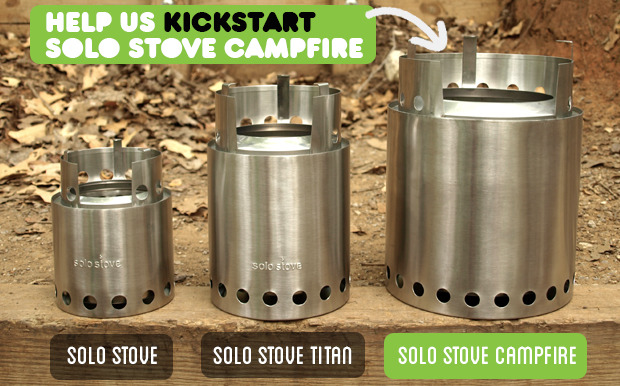
This looks really interesting as a patrol-sized wood-fueled backpacking stove. I have the smallest model, which is great for one or two people. This is sized for more people and should work great for a Boy Scout patrol (around eight).

The design is about 7″ in diameter and about 9″ tall. That is roughly the size of a squared-off gallon milk jug, if you make a cylinder around the outside edges. It weighs two pounds, which is substantial, but not bad for a stove to feed a patrol. Remember, no fuel weight, only firestarter material.

Continue reading

Scout One Pot Stew

If you want to get started on trail cooking, turn to page 318 of The Boy Scout Handbook (14th edition, page 336 in the 13th edition). Choose one ingredient from each column, scale the amounts, and you are on your way.

Since the 11th edition Scout handbook in 1998, the cooking chapter has included a great “choose your own stew” recipe. It might have been in the 10th edition, but I don’t have one of those handy.

The 11th and 12th edition have slightly different lists, so I’ve combined both to make one table. I’ve also split vegetables out into their own column, since they are not really the same thing as cheese or nuts.

Continue reading

Don’t Know Trees? Try Leafsnap

Leafsnap is an iPhone tree identification app. It works for trees when you have internet service, but you might want to carry some paper backup. Luckily, it’s free.

The Leafsnap iPhone app recognizes tree leaves from phone photos. It does a good job, but there are some limitations. You need to shoot a leaf against a white background, and it has to be a tree leaf. I tried it on some shrubs (Western Azalea and Fuchsia-Flowered Gooseberry), but they were not recognized. Yes, we have both of those in our back yard. Lovely plants.

Continue reading

BSA Incident Reporting

I’m excited about the incident reporting that the BSA requires now, but there may be a few kinks to work out.

How are they going to handle the volume with paper reporting? Using the back of a virtual envelope, we have 40,000 troops and five reports/year from each one. That is 200,000 reports. They’ll be lucky to get a few thousand this year, but on-line reporting is a must.

Any “first aid” is a Marginal incident, which must be reported within five days. That means a report for every blister. With about 900,000 Scouts and Venturers, 100% reporting could mean a million reports per year.

Continue reading