Allergy-Friendly Trail Recipes

The cooking merit badge requires a Scout create menus “keeping in mind any special needs (such as food allergies)”, but doesn’t provide a source for allergy-friendly recipes. It does give a URL for FARE, but that doesn’t have an organized recipe section.

The next version of the merit badge pamphlet should reference Hiking Free: Allergy Friendly Recipes For The Outdoors because that is the only book I know of on the subject.

Continue reading

Skillet Lasagna

Made this tonight and it was tasty. This is a simple one pot meal, just right for Cooking Merit Badge. Scouts will learn to dice an onion (not required for the merit badge, but an essential skill), sauté the onion (also not required and also essential), and brown meat (which is always tasty).

They should also learn a bit of “mise en place”, getting everything ready and in its place before starting. The recipe doesn’t make that clear, but a mentor (Merit Badge Counselor) should walk them through prepping the tomatoes and onion first, then getting the other ingredients ready while those are cooking.

Skillet Lasagna

Continue reading

SOTA at Philmont

There are ten summits inside Philmont Scout Ranch that are listed in the Summits on the Air (SOTA) amateur radio program. There are another three summits within the Valle Vidal region to the north of the ranch. Only six of these thirteen peaks have been activated by SOTA operators.

SOTA is an award scheme for radio amateurs that encourages portable operation in mountainous areas. I think it is a great match for Scouting, combining the outdoors, technology, and world fellowship. Grab a radio, hike to the top of a mountain, and talk to people.

Continue reading

International Radio Scouting Badges

Radio Scouting is an international activity, and the World Organization of the Scout Movement (WOSM) has patches and pins for it. I love the classic design, and I also love the price, with the current exchange rate.

The WOSM Radio Scouting emblem looks a lot like the World Scout Crest, but with a radio twist. It has the same purple background, but instead of the circling rope, it has dots, like Morse Code. The fleur-de-lis is at the bottom, and the center is a globe with headphones, a neckerchief, and some lightning bolt lines. It sounds complicated, but it says “Scouts on the radio around the world” without using words.

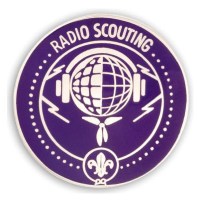
Radio Scouting patch Radio scouting pin

Right now (late 2016), the cloth badge (patch) is $1.29 (£1.04) and the metal badge (pin) is $1.81 (£1.46). You can work out the shipping cost yourself, but I think it is worth it to wear the world-wide symbol of Radio Scouting.

The Five Promises of Scouting

The Scout Law, the Scout Oath, the methods and aims of Scouting; all these are things the Scout is supposed to do. What does Scouting do for the boy?

The eleventh edition of the Boy Scout Handbook started with a list of five things that Scouting promises to each Scout.

I used these promises as the outline for a Scoutmaster Minute at an Eagle Court of Honor. I talked about how the new Eagle Scouts had made the most of these promises during their years in Scouting, giving specific examples for each Scout.

The five promises aren’t in later editions, so I’ll quote the entire page here.

Continue reading

History of Morse Code in the Boy Scouts

Morse code has been in and out of the Boy Scout requirements for over a hundred years. During that time, Morse has changed from a career skill to a rewarding hobby, from a vocation to an avocation. Also during that time, radio has grown to include voice communications, data communications, and broadcast.

Morse interpreter strip

I’ve gathered all the requirements I could find: rank, merit badge, or skill award. Morse was a requirement for First Class for 61 years, 1911 to 1972. It returned as an option from 1979 to 1990 during the skill award period of BSA advancement.

Continue reading

Philmont Pack Weights 2010

I finally found the pack weight notes that I took at Philmont base camp on the morning we started on our trek in 2010.

I’ve estimated base weights by subtracting thirteen pounds. We were carrying four days of Philfood (seven pounds), and most of us were carrying three liters of water (six pounds).

The median pack weight was 42 pounds (29 pounds estimated base weight). The average was 40.1 pounds (27.1 pounds estimated base weight). Total pack weight for the crew was 401 pounds.

Continue reading

MSR Wins Again

The troop’s MSR WhisperLite stoves just keep going, even though the Scouts lose the windscreens. But we can buy replacements. Now, the stuff sacks are just worn out, but I e-mailed MSR and they are available as parts, though not listed on the website.

MSR stuff sacks

So, for $10 each, our stoves have brand new stuff sacks to keep the soot off the rest of our gear. They don’t say “WhisperLite” like the old ones, but they are pretty obviously MSR stove bags.

The next time I need a backpacking stove, I’ll think about who might have spare parts for me twenty years from now. MSR will be high on the list.

Radio Scouting: Hike Safely

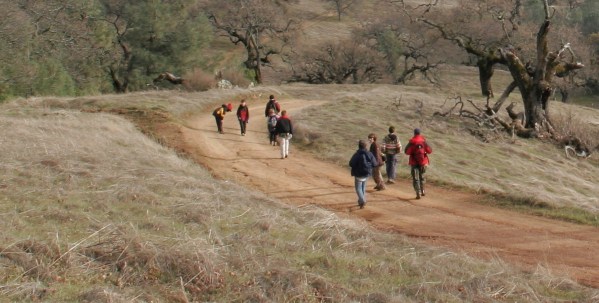
The Hiker Responsibility Code says “Be prepared..to stay together” on the trail. BSA rules require adequate supervision. But how do we stay together and be safe on a troop hike with thirty or forty Scouts? We can hike in independent groups, each with two adults and a crew first aid kit. Or, we can stay in touch with radio communications.

Crew 27 in our area has a scheme for coordination on a hike. Each independent group has a radio. The last group, “sweep”, has adults and a radio. All groups check in every 15 minutes. If a group cannot communicate with sweep, they halt and wait for the groups behind them to get closer. A hike group can relay messages to and from a forward group.

T 14 at Henry Coe 2006 crop 1

Continue reading

Radio Scouting: Emergency Preparedness Merit Badge (and Beyond)

E. Prep. merit badge requires the Scout to take part in an emergency mobilization and make a plan for emergency service. Why not let your local amateur radio ARES/RACES group help out?

Amateur radio operators work with their local communities to prepare for emergencies. They do this with drills, frequent radio practice, and public service (which is also mobilization practice). Many groups have a radio communications net every week. Scouts can also work with CERT (Community Emergency Response Team) and other emergency volunteers.

Let’s look at the three parts of requirement 8 for the Emergency Preparedness merit badge.

Continue reading