BSA Fieldbook Fumbles the Ten Essentials

The essence of the Ten Essentials is easy—carry these ten things to help you not die on the mountain. It is a part of risk management and planning. The new BSA Fieldbook gets this upside down, making it all about gear. Also, the Fieldbook sticks with the 1930’s list, instead of moving to the 2003 “systems” Ten Essentials. For more details, see the current edition of Mountaineering: The Freedom of the Hills.

Continue reading

New Checklists and Reporting Requirements in Guide to Safe Scouting

The quarterly update of the Guide to Safe Scouting includes two new checklists in the appendix.

The Campout Safety Checklist (PDF) is two pages long with 35 items, and a big improvement in BSA risk management. Some of the checklist items:

  • Have weather conditions been checked and communicated?
  • Has an adult been assigned to help Scouts with taking meds?
  • Is a mechanism in place for contacting a camp ranger or camp office (e.g., walkie-talkie, mobile phone, etc.)?
  • Has the location of the nearest hospital/ER been identified and announced to all adults?
  • Is the unit first-aid kit in a conspicuous location and readily available?
  • Have any incidents been recorded and reported, if necessary, to BSA professionals?
  • Have the adult and youth leaders captured any lessons learned from the campout?

There is a similar Event Safety Checklist (PDF) for non-camping activities.

Continue reading

Cooking Merit Badge: Trail Cooking Fail

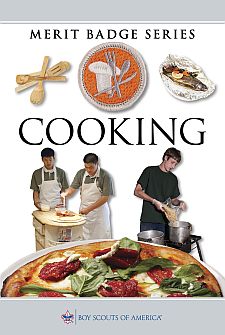
Cooking coverI had high hopes for the backpacking recipes in the 2014 Cooking merit badge pamphlet, but I’m deeply dissapointed. The previous edition listed a single entree with no vegetables and two dutch oven desserts. The new edition has two entrees, but neither can work as trail meals. The first recipe uses raw meat, forbidden in the requirements. The second is mostly heavy canned ingredients. Both have excess that you either toss (violating LNT) or pack out.

This pamphlet is an obstacle to a Scout working on Cooking merit badge. These recipes fail the requirements and direct the Scout towards a style of cooking which doesn’t work for backpacking. These recipes are not “quick, light, and easily stored” (page 47).

Continue reading

Wet High Adventure Training at Cutter Scout Reservation

This was my first time staffing our council’s High Adventure Training (HAT) course. We recommend this course for any adult leading a backpacking trip of more than a few miles or more than a weekend. With three long weeknight sessions and a two night backpacking outing, we go into a lot more detail on risk management, navigation, weather, lightweight gear, and so on.

Our course director was hoping for rain, not because he enjoys it, but because it puts the participant’s skills under additional stress, allowing them to learn more. Some lessons are straightforward, like learning that your jacket leaks. Others are more subtle, like using a map in the rain or cooking and eating dinner in the rain.

Rain started after bedtime Friday and continued until early Sunday morning. It was 48º straight through, ideal hypothermia weather if we’d had wind. The rain let up a few times in the afternoon, I even took off my rain shell for a bit, but it was mostly a rainy, cold weekend. If you haven’t been in a redwood forest, the tree drip continues long after the rain has stopped. Half of the precipitation in a redwood forest is tree drip. You can’t tell whether it has stopped raining until you step into the open. We camped under trees, of course.

Luckily, it was dry and sunny at home, so I could dry out my gear.

IMG_6910

Continue reading

Manzanita Ridge – Short Backpack Outings for Scouts

What backpacking outings make a young Scout really want to get back on the trail? I’m posting some of my favorites from my area, the southern part of the San Francisco Bay area. These work as anyone’s first backpacking trip, but emphasize group camping areas and short, fun trips.

Manzanita Ridge at Henry Coe State Park is a great first backpacking trip. Also check out the pages for The Pine Ridge Association, the volunteers who support Henry Coe SP.

  • 2.5-3 miles each way (depending on which campsite you choose)
  • gentle elevation changes

Manzanita Point has ten group camps stretched out along the end of the road. They all have their advantages, but don’t underestimate the sites at the end of the road (8, 9, and 10).

Continue reading

Castle Rock State Park – Short Backpack Outings for Scouts

What backpacking outings make a young Scout want to keep doing this? I’m posting some of my favorites from my area, the southern part of the San Francisco Bay area. These work as anyone’s first backpacking trip, but emphasize group camping areas and short, fun trips.

Castle Rock State Park

  • 2.8 miles between the trailhead and camp
  • -1200 feet to campsite, +1200 feet back

Castle Rock trail camp has 20 sites in two separated areas. This is an ideal place for patrols to camp separately, with the adults in another campsite. The campsites have water. Firewood is available for $7 per bundle at the campsite (bring exact change). Check the fire hazard warnings before going, because campfires are only allowed in the rainy season.

Continue reading

Two new Scout-like groups

It is a busy week for alternatives to the Boy Scouts of America. On Tuesday, OnMyHonor.net announced that they sponsored a meeting to organize “a new scouting-like organization for young men”. In today’s San Francisco Chronicle, I read about DIY.org a maker-inspired group, Online DIY startup lets kids make good (sorry about the paywall). Odd that both groups actually use their URL as the group name. I’m waiting for that to go out of fashion.

Continue reading

BSA Proposes “It Gets Worse” Policy

The Boy Scouts of America have a resolution on membership policy that will be voted on in May. This opens Scouting to gay youth, but leaves the adult rules unchanged. The adult rules do not allow “individuals who are open or avowed homosexuals or who engage in behavior that would become a distraction to the mission of the BSA.” In other words, stay in the closet if you want to be a Scout leader.

Continue reading

Striking Out On Your Own

Boy Scout leaders always talk about guiding boys to become men, but we don’t always get to see it happen. Late this summer, I watched it happen for my son.

Michael has been eager to go out backpacking with his friends and without older folks. He’s just turned 18, so I can’t quite say “without adults.” I was prepared to go over every aspect of the plans with a critical eye, reserving the option to cancel the whole thing.

Continue reading

Lowering the Risk of Acute Mountain Sickness (AMS)

The journal Wilderness & Environmental Medicine published an article in June with new evidence-based guidelines on acute mountain sickness (AMS), also known as altitude sickness, as well as HAPE and HACE. The article, Wilderness Medical Society Consensus Guidelines for the Prevention and Treatment of Acute Altitude Illness (also: the erratum, with a corrected risk table), is worth reading in full, but I’m going to pull out two highlights.

First, how to keep our risk low. The paper lists three risk categories: low, medium, and high. The description of the “low” category is a good rule for planning mountain trips. Note that the altitudes listed are sleeping altitudes. You can hike higher, but you need to sleep low.\

Continue reading

Tarp Pitch: The Cave

I’ve mentioned this pitch in a couple of other posts, but it deserves its own. This is the tarp pitch I use most often. The video below doesn’t name it and it isn’t listed in David Macpherson’s encyclopedic collection of tarp pitches, so I call it “The Cave”.

I learned the pitch from this YouTube video about pitching an 8×10 Etowah tarp. The video is short and clear, less than two minutes, and it is much better than reading a description. Watch carefully, you do not stake the rear corners. You stake midway between the center and the corners.

Continue reading

Teaching Lightwight Backpacking to Scouts, Scouters, and Parents

How is lightweight relevant to Scouting? First, it’s about safety. Tired campers do risky things. Second, it’s about preparation and responsibility, rather than about throwing forty pounds of gear in a bag on Friday afternoon. Being a prepared, safe member of your patrol builds character and citizenship (Scouting aims #1 and #2) and mental fitness (part of aim #3). And lighter packs mean more fun, which matters because Scouting is a game (with a purpose).

Continue reading

Bookshelf for a New Scoutmaster

When I started as an Assistant Scoutmaster, I immediately bought and read the BSA Scoutmaster’s Handbook cover-to-cover. What a disappointment. Too heavy to take with you and not much useful in it anyway. It doesn’t describe the responsibilities of the Scoutmaster or any of the youth leadership positions. You don’t even need it for the copies of the forms—those are all on-line now.

Luckily, the current Scoutmaster handbook (Troop Leader Guidebook) is much better. So what else should a Scoutmaster read?

Continue reading

Scout Cooking in the Classic Mode—Stick Bread

For the Henry Coe campout with our troop this past weekend, I brought some bread mix so the Old Goat Patrol (the adults) could bake bread on sticks over the campfire. Specifically, this was the “Italian Stick Bread” recipe from The Back-Country Kitchen, essentially, from-scratch biscuit mix with Italian seasonings added.

I last made this when I was Grubmaster for the Raccoon Patrol in the early 1970’s. Back then I used biscuit dough that came in a can, the kind you whack on something to split open. That was more fun but this version tasted better.

Continue reading

ARRL and BSA, Finally Together

The American Radio Relay League (ARRL) and Boy Scouts of America (BSA) published a memorandum of understanding where the ARRL will help with some merit badge requirements and get access to more young people for a dangerously-aging amateur radio population.

Let’s hope this project is more forward-looking than the new ARRL electronic kits which debuted with Morse Code practice oscillator.

Continue reading